How to Find Song Ideas When You're Stuck: 8 Techniques That Work

TL;DR: The best song ideas usually come from specific personal experience, not from trying to think of something interesting. The eight techniques here all work by making your existing experiences and observations available as song material — rather than trying to invent ideas from nothing.
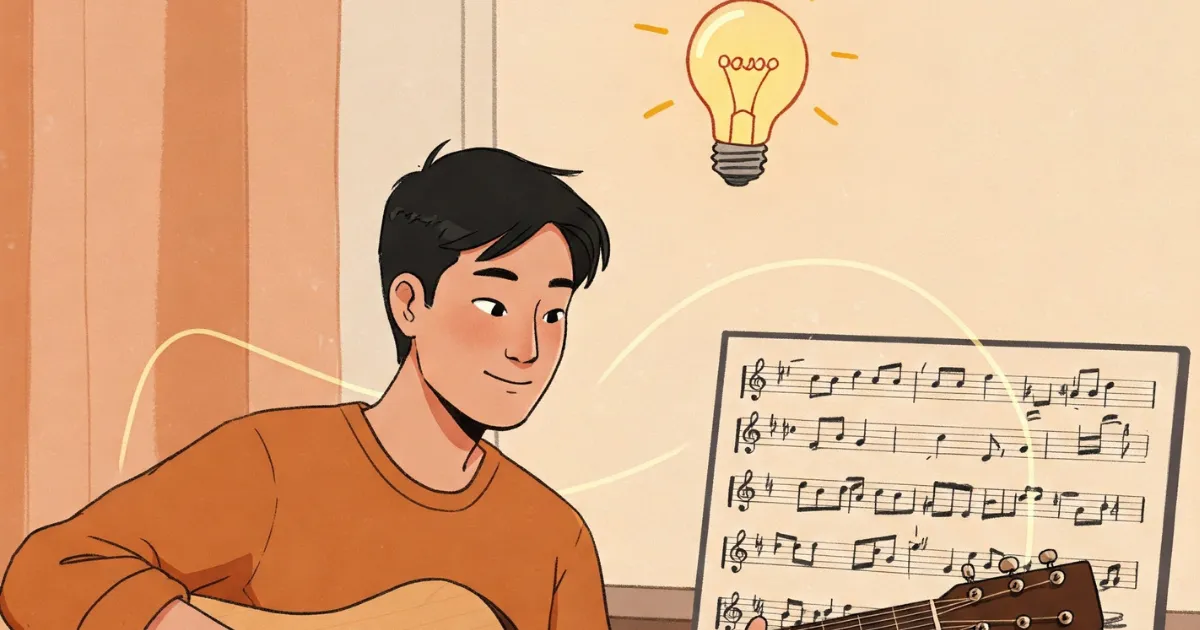
Every songwriter runs into the same problem eventually: you want to write but you don’t know what to write about. The blank page isn’t just intimidating — it’s actively unhelpful, because trying to think of “a good song idea” is too vague a question for your brain to answer productively.
The techniques below give you specific, concrete starting points instead.
Technique 1: Start With What You’re Avoiding
The most powerful song ideas are often the ones you’re instinctively reluctant to write about. The emotion that feels too vulnerable. The relationship that’s complicated. The experience you haven’t processed yet.
Ask yourself: what would you never write a song about? That list is usually worth exploring. Avoiding something as a topic usually means it carries real emotional charge — which is exactly what makes songs resonate.
You don’t have to publish everything you write. Sometimes the most useful approach is to write the song you’re afraid to write just to see what happens.
Technique 2: Mine Specific Memories, Not General Feelings
“Write a song about loss” is too broad to be useful. “Write a song about the specific feeling of finding a voicemail from someone who’s no longer around” is a song.
Go through your memories looking for specific sensory moments: something you saw, heard, smelled, or felt that’s connected to a strong emotion. The more specific the memory, the better the song material.
Keep a running list. Not of ideas for songs, but of moments: “The sound of my grandmother’s kitchen in the morning.” “The conversation we had in the car after the funeral.” “The way the apartment looked after she moved out.” Specific moments are raw material; general feelings are abstractions. Songs work best from the specific.
Technique 3: Turn Observations Into Questions
Songs often start with an observation that raises a question. “Why do some people refuse to say they’re sorry even when they’re clearly wrong?” “What does it actually feel like the moment you fall out of love?” “Why does returning to a childhood home always feel smaller than you remembered?”
Spend time asking this kind of question deliberately. Write down the questions, not the answers. The songs that answer them will develop naturally.
Technique 4: Use Other Art as a Starting Point
A film scene that hit unexpectedly hard. A paragraph from a novel you keep returning to. A painting that makes you feel something you can’t articulate. These are all song starting points.
You’re not writing about the art itself — you’re using your emotional response to it as the seed. “I want to capture in a song the feeling I got from the last scene of [film]” is a legitimate creative prompt.
Technique 5: Write From Someone Else’s Perspective
If you’re too close to your own experience to write about it, try writing from a different perspective. A character in a situation you’ve observed but not lived. Someone on the other side of a conflict you were in. A future version of yourself looking back.
Changing perspective creates useful emotional distance that often makes writing easier. It can also reveal angles on your own experience that you couldn’t see when you were writing directly about yourself.
Technique 6: Let AI Generate Multiple Starting Points Fast
Sometimes the value isn’t in any single idea — it’s in seeing many possibilities quickly so you can recognize the one that feels right.
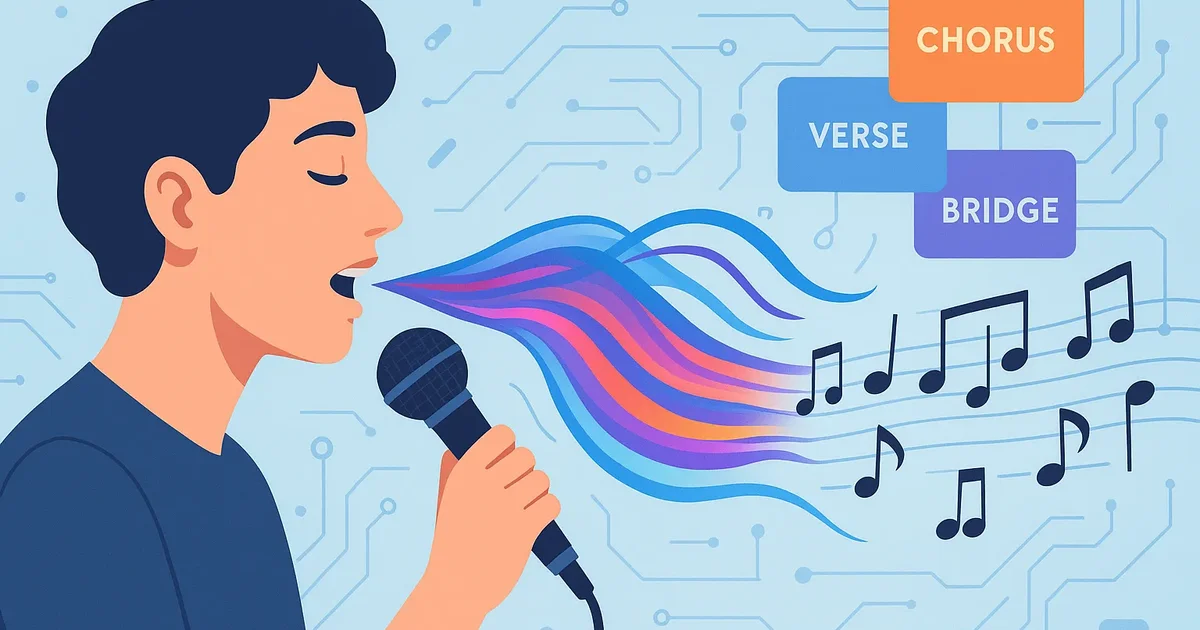
Lyric Genie is a chat-based tool that transforms your song ideas into structured, professional lyrics ready for AI music generators like Suno. Whether you’re exploring themes, testing directions, or generating multiple variations from a vague idea, just describe what you’re thinking, and it creates complete verses, choruses, and style prompts in seconds.
The brainstorming approach: go to the chat with a loose idea and generate multiple versions. “Write a melancholic pop song about leaving home” — generate, review, then change the angle: “Write a version from the perspective of the home itself.” Then: “Write a version that’s more ambivalent — leaving feels like relief and grief at the same time.”
You’re not looking for a finished song in this phase. You’re scanning for the angle that feels most true or interesting. Once you find it, that’s when you start developing seriously.
All your generations are saved on your My Lyrics page, so you can compare multiple angles and return to any starting point.
Technique 7: Set a Theme and Free-Write Around It
Pick a broad theme — transition, loyalty, forgetting, distance, homecoming — and write freely for 5-10 minutes about your personal relationship to that theme. Don’t try to write a song. Just write: memories, images, contradictions, questions, feelings.
Then read back through what you wrote and look for the most alive material. Usually there’s one image, emotion, or observation that stands out. That’s your song starting point.
Technique 8: Set Constraints Deliberately
Paradoxically, constraints often generate more ideas than freedom. Some useful constraints to try:
- Write a song that’s exactly 3 minutes long with exactly 4 sections
- Write a song where every line starts with the same word
- Write a song about something mundane (a grocery store, a parking lot, a specific piece of clothing) but treat it with total seriousness
- Write a song in the style of a genre you’ve never tried
- Write a song from the first memory that comes to mind
Constraints work because they remove the “anything is possible” paralysis and give you a specific problem to solve. A specific problem is much easier to work on than “write something good.”
The Most Important Principle: Volume Over Quality
When finding ideas, quantity matters more than quality. Generate many starting points without judging any of them. Write down bad ideas alongside good ones. Follow threads that seem wrong and see where they go.
The goal at the idea-finding stage is to fill the raw material pool. Judgment comes later, when you’re selecting which ideas to develop. If you apply judgment too early, you filter out the unusual angles and edge cases that often become the most interesting songs.