The Anatomy of a Great AI Lyric Prompt
TL;DR: The biggest difference between generic AI lyrics and lyrics that actually feel like songs is the prompt. A great lyric prompt leads with emotion rather than topic, replaces vague statements with specific sensory details, names the genre and energy clearly, and specifies the perspective and structure. Here is how to build one.
Most people approach lyric prompts the same way they might describe a song to a friend: “write me a sad song about a breakup.” That is enough information to produce lyrics. It is not enough to produce lyrics that feel true, specific, and worth listening to. The gap between a prompt that works and one that produces something remarkable comes down to a handful of things that most prompts are missing.
This post covers the foundational structure that every great lyric prompt shares. Later posts in this series apply it to emotions, genre, mood, and refinement. Genre-specific guides on the blog (country, pop, hip-hop, R&B, and folk) show how these four components shift for each style.
The Core Problem with Most Prompts
The most common failure in lyric prompts is starting with the topic instead of the feeling. “Write a country song about my hometown” is a topic. It tells the tool what the song is about, but not what it should feel like, not what emotional truth it is trying to capture, not what specific detail it is built around.
The result is lyrics that are about a hometown in the most generic possible sense: references to a main street, a water tower, Friday nights, leaving for the city. Technically correct. Emotionally hollow.
The second most common failure is staying vague when the prompt needs to get specific. “Make it emotional” is not information. “Make it feel like the specific grief of realizing someone you love does not need you anymore” is information.
The Four Components of a Great Lyric Prompt
1. The Emotion (Not the Topic)
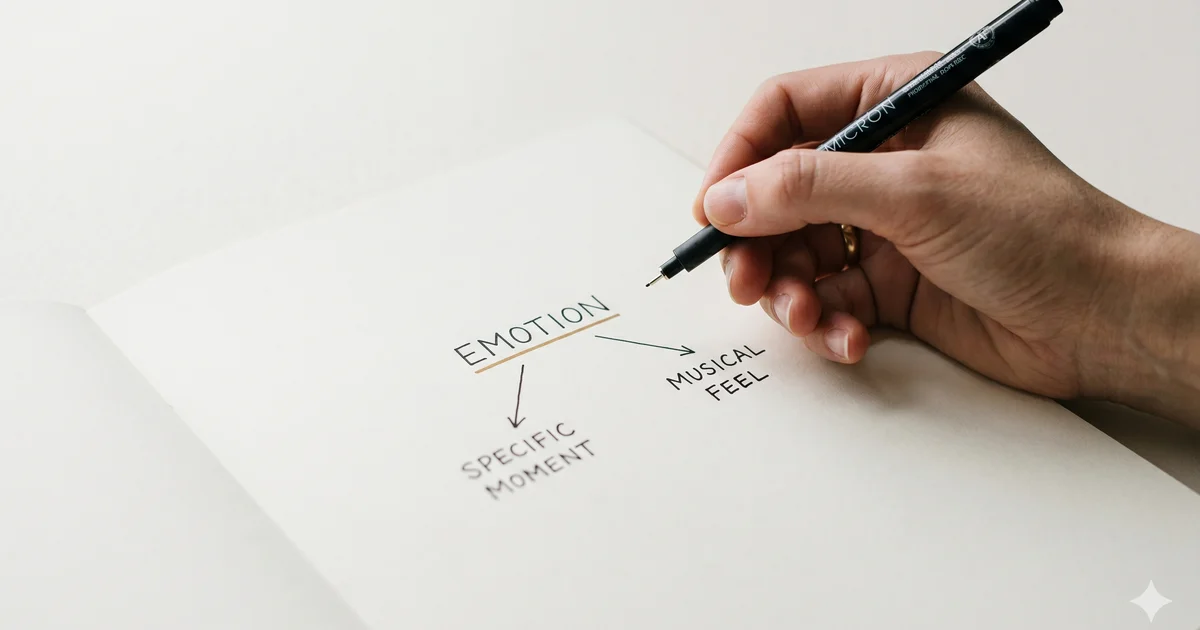
Start by naming the emotional experience at the center of the song, not the subject matter. The subject is what the song is about. The emotion is what the song is.
Compare these:
Topic-led: “Write a song about my best friend’s wedding.”
Emotion-led: “Write a song about the specific feeling of watching your best friend walk down the aisle and realizing, right in that moment, that you are both actually, genuinely grown up now. She is glowing and you cannot stop crying even though you promised yourself you would not. There is joy everywhere. Underneath it is something like wonder: how did you both get here? The narrator’s chest is so full she cannot quite breathe.”
The second prompt gives the songwriter (or the tool) something real to work with. The specific emotional texture shapes vocabulary, pacing, imagery, and structure in ways that “about my best friend’s wedding” simply cannot.
2. The Specific Detail
Great lyrics are almost never built from generalizations. They are built from one specific thing: a particular object, a single sentence someone said, an exact moment in time. The specificity is what triggers recognition in the listener.
Look at the difference:
General: “She was always there for me.”
Specific: “When I got the news at 2am, she was the only one I called. She picked up on the first ring and didn’t ask any questions, she just said ‘I’m on my way.’”
The specific version contains a scene, a time, an action, a piece of dialogue. That is the kind of detail that becomes a lyric worth remembering.
When building your prompt, ask yourself: what is the one specific moment, object, or thing that contains the whole feeling? Find that detail and put it in the prompt. If you can only describe the theme abstractly, keep pushing until you find the concrete thing underneath it.
3. The Musical Context
Genre, energy level, and production feel are not decorative information. They are core to how the lyrics are written. A prompt for a quiet acoustic folk song requires different vocabulary, different rhythm, different line lengths, and different emotional tone than a prompt for an anthemic pop song about the same subject.
Be specific about the musical context:
- Genre and subgenre (“traditional country,” “neo-soul,” “indie folk,” “melodic trap”)
- Tempo feel (“unhurried,” “driving and urgent,” “slow burn”)
- Energy level (“intimate and stripped back,” “building to a big chorus”)
- Vocal style context (“conversational,” “melodic with room for runs,” “spoken word sections”)
- Reference artists if it helps (“in the tradition of Phoebe Bridgers” or “something in the vein of early Drake”)
The musical context shapes everything downstream, from what words feel right to how long lines should be to whether the song should have a traditional chorus or a different repeating structure.
4. Perspective and Structure
Specify who is speaking and what structural elements you need. First-person feels confessional and immediate. Third-person creates narrative distance. Second-person (“you”) creates a direct address that can feel intimate or accusatory depending on context.
For structure, name what you want:
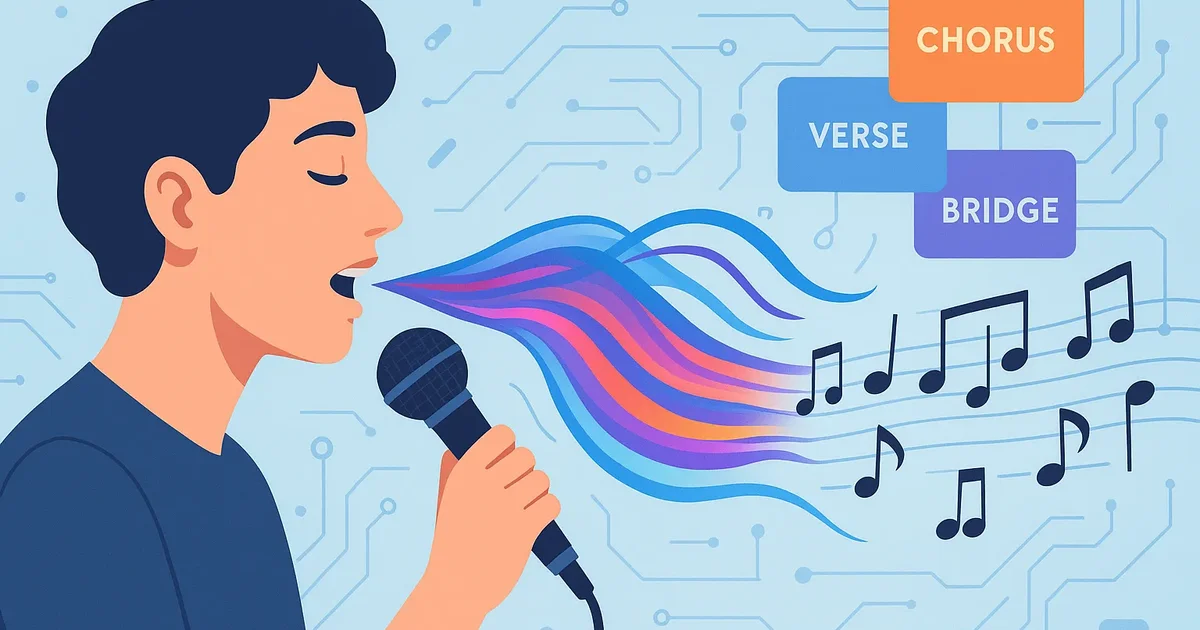
- Verse-chorus or a different structure
- Whether you need a pre-chorus
- How you want the bridge to function
- Whether the outro should repeat and build (common in R&B) or close quietly (common in folk)
These structural choices do not need to be elaborate. “Verse-chorus-bridge, first person, no pre-chorus” is enough. The more precisely you describe the architecture, the less revision you will need afterward.
A Before and After
Here is the same song idea written first as a typical prompt and then as a complete one.
Typical prompt:
Write a song about moving away from home for the first time.
Make it emotional and hopeful. Pop song.
Complete prompt:
I want to write a pop song about the specific moment of
pulling out of the driveway of your childhood home for
the last time, knowing you are not coming back. Your
parents are standing in the driveway waving. The car
is packed. The feeling is not pure sadness and not pure
excitement. It is both at once, and underneath both of
them is something that feels like growing up, like a door
closing that you cannot re-open.

The narrator is twenty-two, first person. Indie-pop with
some emotional weight, the kind of song that feels big
and swelling in the chorus. The verse should feel quiet
and observational, like the narrator is memorizing details.
The pre-chorus should build. The chorus should be the
emotional release of all of that. The bridge should be
the moment they stop looking in the rearview mirror
and face forward.
The second prompt will produce lyrics that feel like a real song. The first will produce something technically correct and emotionally absent.
Here is an example of what a complete, specific prompt produces, generated with Lyric Genie and recorded with Suno:
What to Leave Out
The prompt should describe feeling, story, and musical context. It should not include:
- References to what music generator you will use (Lyric Genie handles its own output format)
- Technical music production terms like “BPM” or “key signature”
- Instructions about song structure tags like “[Verse]” or “[Chorus]” (these are generated automatically)
- Generic quality requests like “make it good” or “make it professional”
Keep the prompt in the emotional and narrative space. The technical formatting is handled.